
General pickleball health and safety education
Prepare gradually, notice warning signs, and make the next good decision
Use practical warmup, mobility, hydration, footwear, eye-protection, and workload guides without mistaking general information for personal medical care.
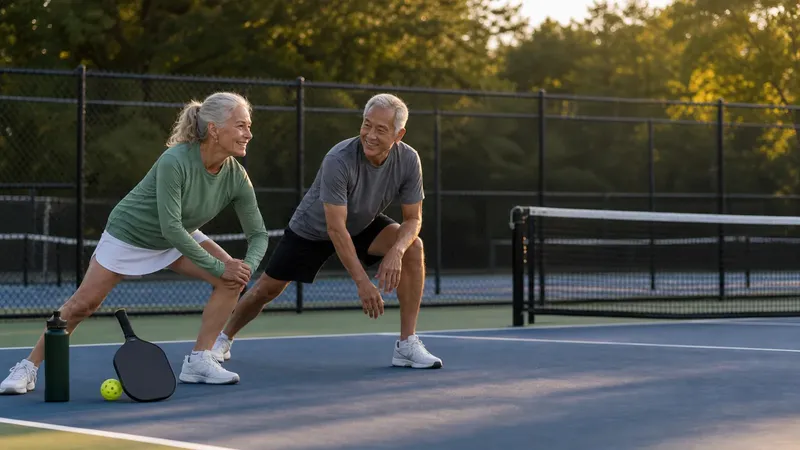
A simple court-day sequence
Prepare, play, notice, adjust
A safer habit is a series of small decisions before, during, and after play.
Prepare gradually
Move easily, add court steps, then use cooperative pickleball contact before competitive pace.
Use the warmup guide →Plan the conditions
Check heat, session length, breaks, water access, shade, and the warning signs that mean stop.
Plan hydration and heat →Manage the workload
Increase court time, intensity, and repetition gradually instead of changing everything at once.
Read play-longer basics →Know urgent eye signs
Learn what to do after an impact, which symptoms need prompt care, and what documented sports eyewear means.
Open the eye-impact guide →Complete safety library
Choose the question closest to today
Each page states its boundary, gives practical next steps, and points to qualified care when general advice is not enough.
Five-minute warmup
Move from easy whole-body motion to court steps, swings, and cooperative contact.
Prepare for play →Seven-minute mobility routine
Five timed pre-play movements, a short cooldown, gentler choices, and clear stop signs.
Follow the mobility guide →Play-longer basics
Review workload, court conditions, preparation, recovery, and when to seek personal guidance.
Read injury-prevention basics →Knee symptoms
Use a non-diagnostic guide to review load, movement, shoes, recovery, and warning signs.
Review knee next steps →Elbow symptoms
Understand common load questions, equipment comfort, recovery, and reasons to seek care.
Review elbow next steps →Eye impacts and protection
Separate urgent impact response from the later decision about protective sports eyewear.
Read the eye guide →Pickleball for older adults
Plan steadier progression, balance, court access, recovery, and social play around your situation.
Open the seniors guide →Hydration and heat
Plan timing, water access, breaks, conditions, and action for heat warning signs.
Plan for heat →Fall prevention
Review court hazards, steadier movement choices, balance, footwear, and personal guidance.
Read the fall-prevention guide →When a general guide stops being enough
Do not use a drill or timer to test a concerning symptom
Stop activity for pain, extreme shortness of breath, dizziness, weakness, vision changes, chest symptoms, faintness, or anything that feels unsafe. Seek emergency or urgent help when symptoms are severe, sudden, or match local emergency guidance.
- 01
Stop the activity
Do not keep adding speed, range, or repetitions to see whether the problem disappears.
- 02
Use the right level of help
Emergency, urgent, or routine care depends on the symptom and your personal situation—not a website checklist.
- 03
Return with a plan
After illness or injury, use qualified guidance to decide timing, load, movement, and restrictions.
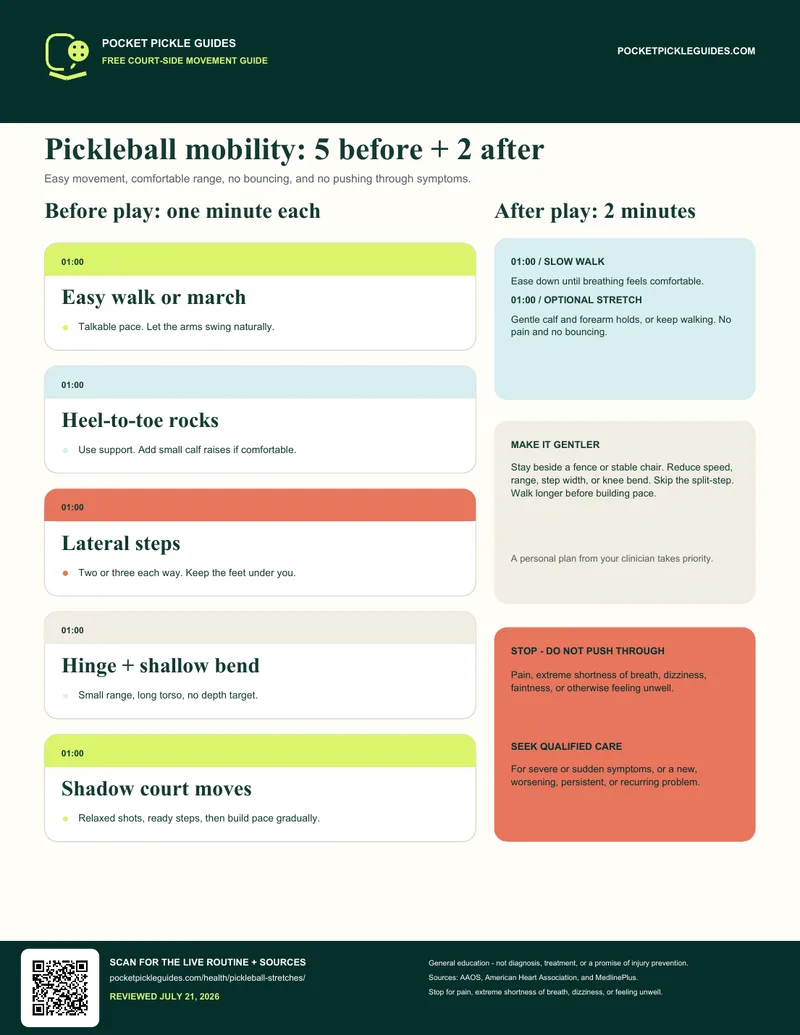
Free court copy
Take the seven-minute mobility sequence with you
The complete explanation stays public. Enter one email to unlock this PDF and every interactive tool for 30 days on this browser. There is no account password or payment, and the newsletter choice stays optional.
- Five timed pre-play movements
- Two-minute cooldown
- Modifications and stop signs
Free reader access
Unlock every free tool and guide
Enter your email once. This browser stays unlocked for 30 days.
Unlocked on this browser. No payment required.
Common questions
Use the limits as carefully as the tips
Can a warmup prevent every pickleball injury?
No. A gradual warmup can help you prepare, but it cannot remove the risks of play or make an injury or health concern safe.
Should I stretch through pain?
No. Stop a painful movement. Do not use stretching to diagnose or test an injury; seek qualified guidance for concerning symptoms.
Does “knee-conscious” mean safe for knee pain?
No. It describes a general routine with shallower movement choices. It is not a personal safety assessment or rehabilitation plan.
Where should I start if I feel well?
Use the five-minute warmup guide or timer, begin at an easy pace, and build toward pickleball-specific movement and cooperative contact.