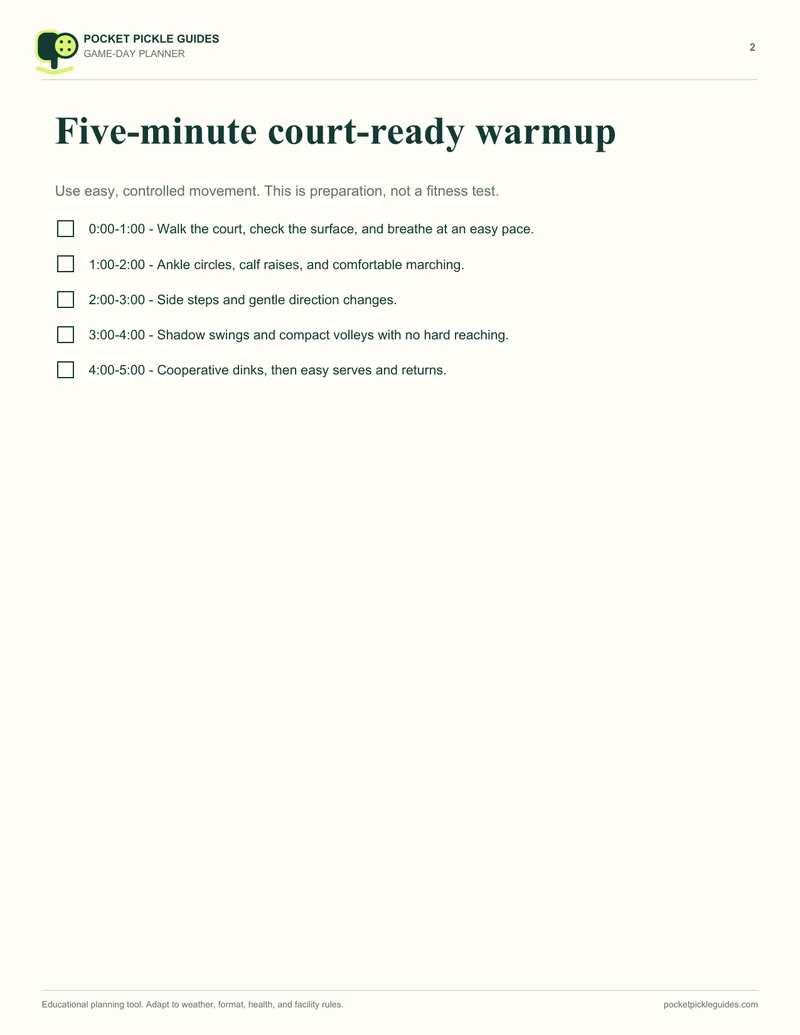
A simple game-day plan has five parts: verify the event, pack for the conditions, arrive with enough margin, warm up from easy movement to pickleball contact, and choose one partner pattern. After play, record one pattern that worked and one skill to practice.
The night before
Remove avoidable decisions before you are rushed
Check the organizer or facility page rather than relying on an old screenshot. Confirm the date, arrival time, address, parking, court surface, indoor or outdoor setting, weather policy, scoring format, registration instructions, and whether nets or balls are supplied.
Event facts
- Start time and recommended check-in
- Exact court or facility entrance
- Format, level, and partner assignment
- Current cancellation or weather notice
Bag facts
- Paddle, correct balls, shoes, socks, water
- Weather layer, towel, eye protection if used
- Identification, registration proof, personal medication
- Small snack and only the extras you actually use
Pack with the forecast and facility in mind. This guide does not prescribe hydration, medication, food, or health decisions for an individual.
Arrival timeline
Give every minute one job
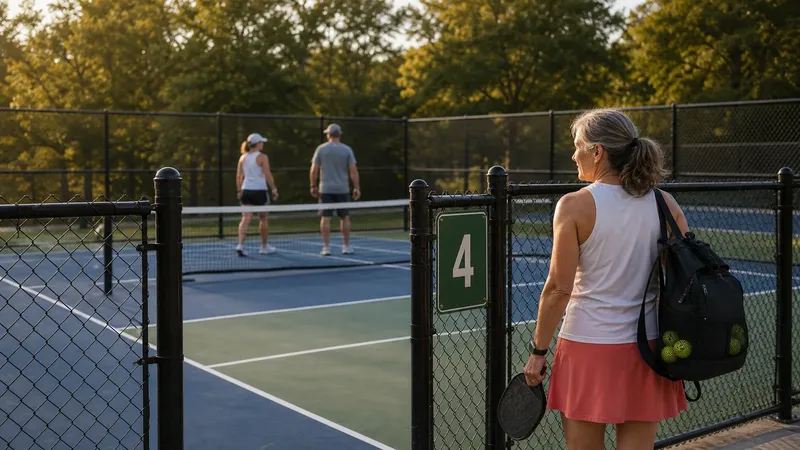
Arrive and orient
Check in, find the court, locate water and restrooms, confirm the format, and handle equipment or schedule surprises.
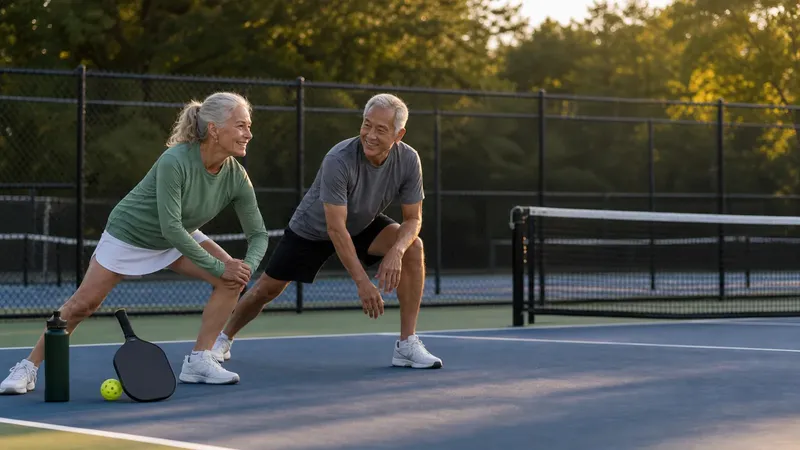
Move gradually
Begin with easy whole-body movement, comfortable joint motion, and court steps before fast changes of direction.
Find contact
Use cooperative dinks, blocks, groundstrokes, serves, and returns. Build pace only while contact and balance stay comfortable.
Agree and settle
Choose one middle-ball cue, one return target, and one between-point reset. Then stop adding instructions.
Warmup
Progress from general movement to the shots you will use
- 01
Easy movement
Walk or march at a conversational effort. Notice the surface and anything that makes movement feel unsafe.
- 02
Comfortable range
Use shoulder turns, calf raises, a small hinge, and lateral steps without forcing depth or bouncing into a stretch.
- 03
Shadow court movement
Rehearse ready position, controlled split-step timing, and relaxed swings before adding a ball.
- 04
Cooperative contact
Build from dinks and blocks to serves, returns, and first-four-ball patterns. A warmup is preparation, not a contest.
Partner huddle
Four decisions are enough
Choose depth and margin before chasing a sideline.
Use a clear “mine,” “yours,” or agreed cue, then honor it.
Agree that drop, drive, or lob is a decision—not an identity.
Choose one breath, phrase, or simple target between points.
Do not script an entire match. Partners need shared priorities and permission to adapt, not a list of corrections after every miss.
During the match
Track patterns, not a running critique
Write only during an allowed break or after the match. Record the final score, which side started, and a few observable patterns. “Three short returns created pressure” is more useful than “we played badly.”
| Record | Useful example | Avoid |
|---|---|---|
| First-four-ball errors | Two returns short; three thirds attacked high | We need more consistency |
| Pattern that worked | Deep middle return, then calm fifth-shot reset | Our strategy was good |
| Communication | “Mine” solved middle balls after Game 1 | Partner was confusing |
| Next practice | Ten return rounds to a deep middle target | Practice everything |
After play
Leave with one next step
Cool down gradually if that is comfortable for you, pack the court cleanly, thank partners and organizers, and record a short review while the patterns are still clear.
- Keep: one choice or cue that helped.
- Practice: one repeatable skill connected to a real point pattern.
- Clarify: one rule, schedule, or partner question before the next event.
- Recover: use your normal personal recovery plan and seek qualified advice for concerning symptoms.